
Soul Massage Head Spa · Massage Guide
Massage for Tension Headaches
By the Soul Massage Head Spa team · 1,898 words · Sources: NCCIH, Mayo Clinic Health System · Updated
Tension-type = most common headache (NINDS) · 60-min massage $75 cash · open daily to 9:30–10 PM
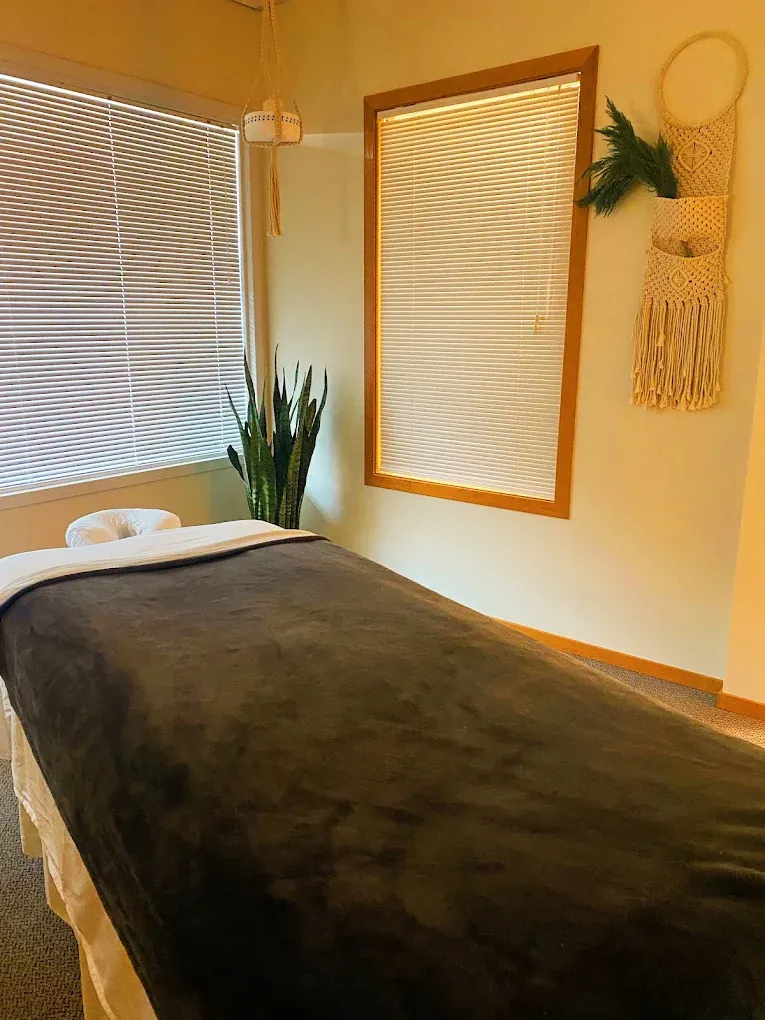
Private rooms — never shared Groups of 5–10 at one studio
Birthday? Anniversary? Need a gift? Spa gift cards for head spa, massage, or facials.
Buy a Gift CardThe problem
The headache most people mean
It shows up mid-afternoon as a dull band across the forehead, or a grip at the base of the skull, and it gets filed under "just stress." The National Institute of Neurological Disorders and Stroke describes tension-type headache as the most common form of headache — and if you searched your way to this page, odds are it's the one you have a long-running relationship with.
People book massage around these headaches constantly. At our four studios a 60-minute full-body massage is $75 cash, and neck-and-shoulder tightness is among the most frequent things guests mention at check-in. So this guide takes the question seriously instead of promising the moon. Three things, in order: what the major institutions actually say about massage and tension headaches, when a headache means skip the spa and call a doctor, and what Soul realistically offers for the ordinary, non-alarming kind.
One framing note before the evidence. A wellness spa writing about headaches has an obvious incentive to inflate. We've made the opposite bet — that you'll trust a business more when it tells you exactly where its service stops and medicine begins. Everything below is written to that standard. (It's also, frankly, the better business strategy: the guest who wasn't over-promised is the one who rebooks.)
The sources
What NINDS and Mayo Clinic actually say
We'd rather quote people with no stake in your booking. Two institutions anchor this topic, and neither of them sells massages. Reading them directly takes maybe twenty minutes and permanently upgrades your defenses against wellness copywriting — including, in principle, ours.
The NINDS picture
NINDS's headache overview maps the whole landscape — headache types, common triggers, and the range of management approaches people use. Stress and muscle tension figure prominently in the tension-type picture, which is the door through which practices aimed at reducing that tension, massage included, enter the conversation. What you will not find there is language calling massage a treatment that resolves headaches. You won't find it here either.
The Mayo Clinic angle
Mayo Clinic's material on tension headaches treats them as something people manage over time, with stress management woven throughout the guidance, and it names massage among the approaches people use for stress and tight muscles. That is the accurate size of the claim: a tool some people find useful, inside a bigger picture that includes sleep, movement, and — when headaches persist or worsen — an actual clinician rather than a spa. If you follow one outside link from this page, make it that one — short, free, and written for patients rather than researchers.
Evidence
How strong is the evidence, really?
The umbrella source is NCCIH's massage therapy overview, which walks the research condition by condition. The through-line: massage shows short-term benefit for some kinds of pain in some studies, effect sizes are usually modest, and the trials tend to be small. For tension-type headache specifically, evidence exists but is limited — enough to make massage a reasonable thing to try for muscle-tension comfort, nowhere near enough to call it a treatment. That's not a knock on massage; it's a description of how hard this kind of research is to run well.
When you read massage studies — or a spa's cheerful summary of them — keep these filters switched on:
- Small samples: many massage trials enroll a few dozen people, which caps how much any single result can prove.
- No blinding: participants always know they received a massage, so expectation effects ride along with every measurement.
- Short horizons: outcomes are usually tracked for hours to weeks, not months or years.
- Modest effects: "statistically significant" often means "somewhat better on a rating scale," not "gone."
What that means for a booking decision
Treat massage the way the evidence treats it: a comfort intervention with a high floor and a modest ceiling. The floor — an hour of skilled, pressure-matched work on exactly the muscles that ache, for $75 cash — is guaranteed by the format itself. The ceiling — whether it changes your headache month — varies person to person, and a single $75 experiment answers that question for you better than any journal abstract will. Not a scientific standard of proof, no. For a decision this size, it doesn't need to be.
Safety first
When a headache needs a doctor, not a massage table
This is the one section of the guide where medical language belongs, because standard guidance from neurology sources is unambiguous and worth repeating verbatim in spirit. Call a doctor right away — do not book a spa visit — if a headache fits any of these patterns:
- It arrives suddenly and is the worst headache you've ever had.
- It follows a fall, a collision, or any blow to the head.
- It comes with fever, a stiff neck, confusion, or a rash.
- It comes with vision changes, slurred speech, weakness, numbness, or trouble walking.
- Your usual pattern changes character, or headaches steadily worsen over days or weeks.
And the ordinary kind still deserves attention
Nothing on that list applies to most tension-type patterns — but frequency is its own signal. Headaches arriving most days, or managed with pain relievers several times a week, are worth raising with a clinician even without red flags; medicine has effective options that a spa simply isn't. Massage can sit comfortably alongside that care as the comfort layer. What it can't do is stand in for it — and a spa that wants your trust should be the first to tell you when not to book, which is why this list is on our site at all.
At Soul
What we actually offer and what we won't say
No service at Soul is a headache treatment, and we won't name one that way. What exists on the massage menu is straightforward: full-body Swedish massage, therapeutic deep tissue that folds in trigger point and myofascial work, and head spa rituals whose massage stage covers head, neck, and shoulders. Guests carrying the classic screen-day pattern — tight upper traps, a guarded neck — tend to land on one of the four options below. Prices are cash figures — the house rule takes $10 off every non-combo menu line for cash payment — and identical at all four studios, so the choice is genuinely about format, not deal-hunting.
| Option | Length | Cash | Focus |
|---|---|---|---|
| Full-body massage | 60 min | $75 | Overall tension, pressure set to your preference |
| Full-body massage | 90 min | $105 | Extra time to sit with the neck and shoulders |
| Therapeutic deep tissue | 60–90 min | $75–$105 | Trigger point work on specific tight spots; next-day soreness is normal |
| Signature Head Spa | 60 min | $78 | Scalp cleanse plus the head-neck-shoulder massage stage |
The head spa route surprises people
The massage stage of a head spa spends deliberate time exactly where tension-type headaches are felt — skull base, temples, neck — inside a 60-minute ritual that also leaves your hair clean and blow-dried. $78 cash. Never marketed as relief; frequently described by guests as the quietest hour of their month. Both statements can be true at once, and around here they are. The comparison that matters isn't head spa versus massage on paper — it's which one you'll actually rebook, because whatever maintenance effect exists follows rhythm, and rhythm follows enjoyment.
Practical notes
Getting the most from the hour
Two habits separate a decent massage from a genuinely useful one, and neither costs anything.
Pressure is a conversation
Your therapist checks pressure preference before starting — answer honestly, then revise mid-session as often as you like. Deep tissue in particular is a negotiation: productive pressure, not a pain-tolerance contest. If you'd rather stop entirely, the session ends at no charge. Plan on mild soreness the day after deep tissue work; it's a normal response that fades on its own, and worth mentioning at your next visit so pressure can be tuned. A trick for first-timers: name the spot, not the technique — "the right side of my neck," "between the shoulder blades" — and let the therapist pick the tools. You know the ache; they know the anatomy.
The unglamorous companions
Massage works best as one input among several, and the others are free: consistent sleep, water, and breaks from the exact screen posture that loads your neck in the first place. Our stress and sleep guide covers the evening-routine version of this thinking. None of it is exciting. Stacked with a monthly 60-minute massage at $75 cash, it adds up to a reasonable, low-claim maintenance plan you can actually keep. And if evening is when your neck complains loudest, note that final starts run as late as 9 PM at Everett — ending the day on the table beats ending it hunched over one more email.
Booking
Booking around a tension-heavy week
Every Soul studio is open seven days a week and runs into the evening — Mill Creek 9:30 AM to 9:30 PM, Everett until 10 PM — so a post-work slot is realistic rather than theoretical. Book online, or call or text your nearest studio with the service, party size, and preferred time. Arrive 10 minutes early, and give 12 hours' notice if plans change. Walk-ins work when a room happens to be open, but tension-heavy weeks correlate suspiciously with everyone else's — Friday evenings fill first.
If firm, specific pressure is what your shoulders are asking for, start with the deep tissue massage in Mill Creek — it covers how trigger point sessions differ from Swedish, and what first-timers should expect from the day after. Morning people can run the whole logic in reverse: Mill Creek opens at 9:30 AM daily, before the day's tension has accumulated anything worth working on.
A tool people use inside a bigger picture — that's the accurate size of the claim.
Questions readers actually ask
Can massage cure tension headaches?
Which massage should I book for neck and shoulder tension headaches?
When do tension headaches mean a doctor instead of a massage?
Is it normal to feel sore after deep tissue work?
How much does a massage cost at Soul?
Can I get a same-evening appointment after work?
Does the head spa help with tension headaches?
Sources
The massage research worth reading, from institutions that don't sell massage:
- NCCIH — Massage Therapy: What You Need To Know
- NCCIH — 5 Things To Know About Massage
- NCCIH — Massage Therapy for Health (science digest)
- Mayo Clinic Health System — Massage for depression, anxiety and stress
Massage services at Soul are performed by Washington-licensed massage therapists, and our scalp-care team has worked with Milbon professional products since the first studio opened in 2021.
This is general wellness education, not medical advice. Soul is a relaxation and wellness spa, not a medical provider. Our services support relaxation and general well-being; they don't diagnose or treat medical conditions. Talk with your doctor about persistent scalp, skin, or pain concerns.
Reading about it is one thing. Feeling it is the other.
Four Soul Massage Head Spa studios across Mill Creek, Everett, Kirkland & Lynnwood, WA · Signature Head Spa from $78 cash